Category: Deep Thoughts
August 28th, 2006

B-2-B advertising needs an image consultant. Part 2

In my last post, I wrote about the misuse of brand image and product marketing in the B-to-B space. In his day, Leo Burnett believed that

“The eloquence of an image is more convincing than the traditional arguments touting the products being sold.”

When you read this post, look around your work station. Does the products your office uses state what kind of company you work for. Shouldn’t it?
Apple_office_1

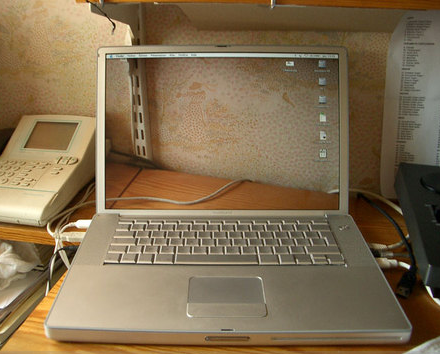
Apple once again has managed to pull this off, when you walk into an ad agency that uses PCs, you immediately question their creative legitimacy. Why is that? We all understand that Apple’s intrinsic brand values is creativity and the people that use Apple use that as a statement. They have done this by using their consumer brand and paraelled efforts to their business category. They obviously understand people’s demand for image and a statement about their creativity, doesn’t stop as they walk through their office door. What does IBM, EMC or Intel users stand for besides what the products do? Shouldn’t we be able to know that?

I’m stating by no means that the business and consumer audiences are identical. Business targets will need a greater sense of purchase justification and eventually will need the rational elements to sell ideas and products into their co-workers and managers. They need product specifics to be available for the technical minded. Just not in place of an image for the brand.

I’ve put together some helpful guidelines that may assist in thinking beyond the B-to-B stereotypes.

1.    Assign a role to your communications. Businesses don’t need to give customers everything in one ad. If it is a “brand” ad, just have it communicate that and that only. Product advertising has its place but, have faith that if you can intrigue them enough with just an image or an idea. Then lead your customers with that intrigue, to want to seek you out.

2.    Draw the line between brand and product. How you communicate a brand or an image is completely different than what it takes to tout products. While they need to be congruent, they are not the same thing and cannot be done well without both being clearly articulated and differentiated.

3.    Give your customer some credit. You’re dealing with highly educated people in the workplace. While they might not all be marketing savvy, they will get the image that you are trying to project, even if it’s done in an obscure way.

4.    Don’t shop around creative ideas. Engineering doesn’t have you double-check their software configurations or hardware settings, so why do you need to check to see if they agree with the brand image? 

So I challenge us as an industry to come up with and create some truly revolutionary ideas and brands within the space. Stop focusing on a quantified list of product specs with a nice safe message, and then try to call that a brand. A brand is something people can belong to, have confidence in, understanding its statement to the world. Creativity and true differentiation can be achieved in this space if we can all free ourselves from the limitations of precedence. — Posted by Nick.

Nick manages Communications Planning for Mortar. He can be reached at “ntalbert@mortaragency.com”>

August 22nd, 2006

B2B advertising needs an image consultant. Part 1

  Dull_1                                                                                                                                                

Recently, I was in a client meeting and was asked to come up with truly revolutionary examples of ad concepts done by B-to-B advertisers. As I researched notable business to business advertisers, very few stood out as truly exciting, let alone mention worthy.

This notion baffled me.

What is making a whole category of advertising so blasé?

Are our expectations of business brands just not up to the same standards as consumer brands? Why should loyalty to a B-to-B brand be based solely on its suite of product specs?

I took a look at some of the notable B2B brands like Cisco, IBM and Intel, and even these still play into many of the same issues. They fail to create an image or an experience with their brand outside of the product attributes and benefits.  What does an IBM office look like vs. a Dell office? Is there a difference beyond configuration specifics? According to this the current view, the answer would be no.

At first look the problem seems to be two fold:

1. Business advertisers focus too much on their competitors and other B-to-B advertisers, creating an endless pool of variations of the same idea.

2. B2B companies don’t seek to enhance their understand of their customers beyond what they do for a living. 

The first of the two shouldn’t be that surprising if anyone has ever done work in this space. Rarely do B2B marketers look outside the realm of business for inspiration. This is by far the ordinary way of doing things, using the logic “That companies sinking millions into a purchase, want to be reassured that they are spending money with a legitimate vendor.” Sure, putting together an ad together that feels like what competitors also might do, but haven’t, keeps you in consideration with the rest of the pack. However, it doesn’t make you stand out either. Yes, your product should be helping you in differentiation, but as technology becomes more accessible and more advanced those lines will soon be a close as a Coke and  Pepsi taste test. The image of those brands is what keeps them from becoming a commodity. After all, who made the rule that road to legitimacy is spec-centric, chest-thumping product claims or slight humorous commentary of a process pain point? (See all ads by EMC, Microsoft, Dell, Novell, and the list goes on.) There is a great amount of learning that can be gained from looking outside the business category for inspiration.

This leads me to the second issue: B2B advertisers don’t really “know” their customers. People in their work environments are still people, they don’t lose human nature the moment they walk into the office. They still have feelings, drivers, emotions and desires just like they do when they buy shoes or cars or toothpaste. B-to-B ads focus on office decisions as purely rational. By the state of B2B advertising, you would think that we are speaking to a machine governed by purely logic. One could argue that because jobs, lives, brands and companies are at stake by these decisions, they are filled more so with the emotive aspects than that of consumer brands. The saying “It’s not personal, it’s just business” is about as far from the truth as we can get. There are key insights being ignored. What about emotional drivers? What about the societal values or the motives of the influencer? They exist in the workplace too.

— Posted by Nick.

Nick manages Communications Planning for Mortar. He can be reached at ntalbert@mortaragency.com

August 22nd, 2006

Caio! SPQR.

Spqr
Mortarmark and his family are back after two fabulous weeks in Tuscany.

Funny thing about Italy. There is next to no advertising. Very little discussion about the web.
And everyone rides a Vespa — while smoking — and drinking a coffee.

All they do is eat, drink and make merry.

Interestingly though, the Italians gave birth to what was the first global brand: SPQR.

SPQR stands for the "Senate and the Republic of the People of Rome."
You can still find it etched into stone on memorials and buildings across Europe.

Saatchi & Saatchi CEO Kevin Roberts notes in his recent book "Lovemarks: the future beyond brands" SPQR was "one of the most feared and respected trademarks in the world." Four letters that told you the mighty Roman Empire was nearby. 

"Over the centuries trade increasingly stretched past local boundaries and the importance of trademarks increased. Its fine to trust the local blacksmith. You could check out the forge, bite the metal, ask around. But the weird guy bringing iron implements from the next village? Not so easy. Trademarks moved up a notch from simple name tags to marks of trust and reliability" Roberts continues.

See the trip was not completely wasted.

July 24th, 2006

Learn to be wrong

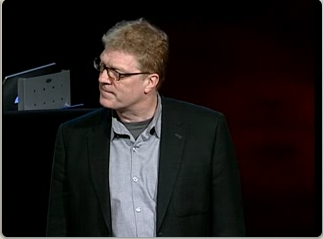
Picture_13 Sir Ken Robinson spoke at this year’s Technology Entertainment Design (TED) conference in Monterey. Watch this video and marvel at how easily he reminds us to embrace failure on the path to creativity.

Also pay attention to the fact that this is a "business" speech. Made all the more powerful because it is warm, engaging and completely devoid of visual aids.

Ah, refreshing.

"Sir Ken is author of Out of Our Minds: Learning to be Creative,
and a leading expert on innovation and human resources. In this talk,
he makes an entertaining (and profoundly moving) case for creating an
education system that nurtures creativity, rather than undermining it."
(Recorded February, 2006 in Monterey, CA) — Ted’s website.

July 16th, 2006

The Long Tail

Picture_11_1
The ether is buzzing with coverage of Wired editor Chris Anderson’s "The Long Tail".

"[The Long Tail is] an example of
an entirely new economic model for the media and entertainment
industries, one that is just beginning to show its power. Unlimited
selection is revealing truths about what consumers want and how they
want to get it in service after service, from DVDs at Netflix to music
videos on Yahoo! Launch to songs in the iTunes Music Store and
Rhapsody. People are going deep into the catalog, down the long, long
list of available titles, far past what’s available at Blockbuster
Video, Tower Records, and Barnes & Noble. And the more they find,
the more they like. As they wander further from the beaten path, they
discover their taste is not as mainstream as they thought (or as they
had been led to believe by marketing, a lack of alternatives, and a
hit-driven culture).

"…If the
20th- century entertainment industry was about hits, the 21st will be
equally about misses."

"For too long we’ve been suffering the tyranny of
lowest-common-denominator fare, subjected to brain-dead summer
blockbusters and manufactured pop. Why? Economics. Many of our
assumptions about popular taste are actually artifacts of poor
supply-and-demand matching – a market response to inefficient
distribution."

The Internet offers unlimited shelf space and virtually frictionless distribution, allowing business to make hits out of misses, giving the re-run industry an entirely fresh lease.

Although his examples are drawn from the entertainment industry, it appears to us that many other businesses will benefit from the explosion of demand further down the demand curve.

Take for instance computer storage. Companies like Isilon Systems (a Mortar client) provide customers with relatively limitless capacity for storing digital content — like movies, music, books, pdf documents, photos, and large images — and are well positioned to benefit from demand for systems designed to ease the storage and retrieval of data.

And as corporations store more and more data, they will feed an expanding tail of demand from users; and evergreen demand for Isilon.

Each of us too is contributing to the Tail.

Every photo we take, document we create, video uploaded or song downloaded has to go somewhere. I know I’m not the first to save several generations of video players just so I can be sure I’ll be able to play back old tapes.

Each action fuels demand for aging content and systems. And the efficiency of the Internet in aggregating the interests of small numbers of widely dispersed users ensures the continued (and profitable) existence of the means to access, store, retrieve and edit content even long after the originators have crumbled into ashes.

Now the long tail seems to be everywhere.

What is this blog if it isn’t a classic Long Tail business?  With every post I am marking my trail on the web and giving those close to me one more reason to dig up my words at some future date. (As my friend  at SixApart chuckled this weekend, "Blogging really is like crack. Once you’re hooked. You’re hooked").

And as we pointed out in the recent post about HP’s new campaign "The Computer is Personal Again,"  the insight that our legacies are increasingly captured digitally has inspired a new line of laptops and, in turn, a different way of thinking about personal computing.

We are not the first to grapple with the long reach of the long tail.

As Nathaniel points out on his blog, the development of the railroads across the continential US was an early (but certainly no less disruptive) example of Anderson’s  theory:

"In the mid-1800’s, America was almost two separate nations—one on
the east coast, and one on the west coast, separated by rugged, untamed
land. California had been growing steadily, and then the gold rush hit,
and all of the sudden it wasn’t growing anymore—it was exploding.
Various businessmen saw the huge potential of connecting the east and
the west overland, largely to make it easier to trade between the two,
and they eventually convinced the government to finance a great
race… In 1869, the two tracks were
connected at Promontory Summit, Utah, and the first Transcontinental
Railroad (in the world, actually) was completed."

"But
the railroad did a lot more than just allow easier trade between east
and west: it also opened up the interior to a level of settlement not
previously possible. Points inland that would’ve previously taken weeks
or months to reach by wagon suddenly became accessible to those who
weren’t interested in being completely isolated from civilization…"

"The transcontinental railroad was to the real estate of inland America as iTunes
is to the music marketplace of today. It enabled people to move away
from the “hits” of the coasts to the “long tail” of the interior, and
many jumped at the opportunity. The middle of the country exploded with
growth, which while far from being painless still allowed many who
never could have imagined owning land or being a business owner to do
just that."  Blog.Talbott.WS

That’s always the way with great business books. Look around. The Long Tail is suddenly everywhere.