Category: Marketing Insights
July 4th, 2007

More early adopters leave the station. Google + Grand Central combine to bring us one phone number (at last).

In the last few days the phone industry was been marked by not one, but two, big events.

Apple’s iPhone debuted.

But it is the second biggie, Google’s acquisition of GrandCentral, a service that ties together all of your existing phone lines, numbers and voice mail boxes into one number and one online inbox, that caught our attention.

Leaving aside the fact that is a supremely cool idea, fitting very nicely into the why-didn’t-i-think-of-that category alongside, oh, i dunno, the Spring Loaded Xmas Tree Stand or the non-slip toothbrush holder, designed to hold a brush in place while toothpaste is added).

Interestingly, Grand Central adopted the now commonplace tactic of signing people up for a virtual waiting list.

Taking a page from Google’s book (remember how you had to know someone to get one of the original Gmail accounts?). Likewise, you can’t simply sign up for Grand Central without an invitation–but you can raise your hand for an invite by registering on their site.

Look for similar stealth launches in the future as more new products seek a quick path to the much coveted early adopter (and the inevitable buzz of being unobtainable).

June 21st, 2007

iWant!

Index_hero20070621

It’s the second coming next Friday! Okay, so no Jebus ain’t returning, but the iPhone makes it’s debut and, to listen to some gadget geeks, this might be only slightly less important.

Slate’s Jack Shaffer is not one of those geeks. Quoth Shaffer:

No drop of milk oozes from the Apple teat without a crowd of journalists gathering to swallowing it up.

Gawker Media kingpin Nick Denton likes the quote – as do we – but has a different take on the situation:

First, Apple has indeed have dribbled out news about the iPhone — such as the extended battery life, the smudge-proof screen, and easy access to Youtube clips — quite strategically. The Slate columnist, among others, has noted the company’s cleverness in building up excitement. But Apple also gets admiration for precisely the opposite strategy, when it holds back, with incredible discipline, all details of a product until the actual launch. Truth is that, when a company has a hot product to sell, its marketers will look brilliant, whether they dribble or withhold.

Either way, the commercials make us drool in anticipation like a zombie hankering for some gray matter.

June 13th, 2007

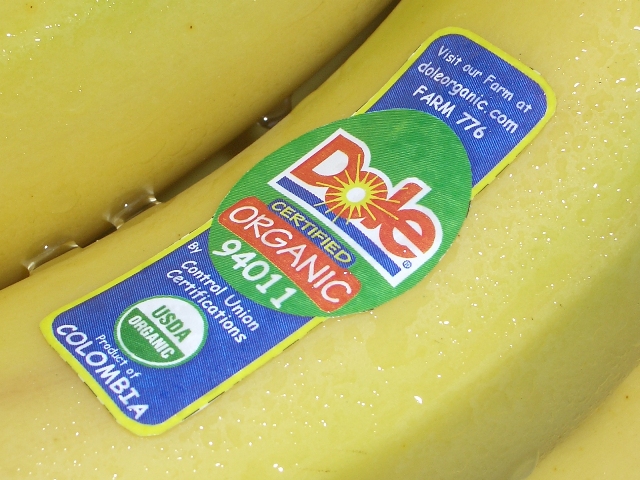
Do you know where your bananas come from?

If you are what you eat, then you’re definitely a member of the LOHAS market if you’re downing a Dole organic banana (and know what we know about the Dole Organic Program).

Some of our recent work has brought us deep into the mindset of the “Lifestyles of Health and Sustainability” segment and there’s at least one thing we’re sure of – transparency is everything. 

And that can drive some companies bananas. But, it seems, not Dole. Dole has created a site where its customers can enter their fruit’s 3-digit sticker code and find out exactly who, what, and where their bananas come from. Country, farm, certifications, pictures… everything. They go a step further by outlining their actions and intentions to improve their leadership in organic agriculture.

Cimg6868_2

How’s that for up-front and honest? Makes me want to go buy a Dole banana.

April 4th, 2007

Were have we seen this idea before?

Wo1_25_2
Spotted these riffs on the idea we exploited for active learning specialists, FrontRow on Adrants. Our version is here.

April 4th, 2007

Car buyers say one thing, do another.

Escalating gas prices are not having as much of an impact on consumer behavior as Detroit expected, reports Joseph White in yesterday’s Wall Street Journal. Apparently, we’re turning our nose up at  GM’s gas-sipper Aveo (37 miles per gallon).

The Journal reports:

"People say that $3 a gallon gas makes them think twice about their energy consumption, and what kind of vehicles they drive. People say that global warming worries them, and that they want to do something about the tons of CO2 that burning fossil fuels pumps into the atmosphere.

So far, however, these concerns haven’t translated into a sustained, meaningful decrease in Americans’ gasoline consumption, or significantly fewer miles traveled. Nor has there been a dramatic shift in the kinds of vehicles Americans want to buy. Small cars, small crossover wagons and compact trucks make up only about 25% of total retail sales in the U.S., says GM’s Mr. Ballew, compared to 40% for small vehicles in Europe, where gas prices are about double U.S. levels.

"Small cars have underperformed out of the gate this year, as gas prices moderated during the winter months,"  Mr. Ballew says.

Sure, Prius sales continue to soar (manufacturer Toyota was the only car maker to enjoy a sales increase in March while the Big 3 reported worsening sales).

But the Journal’s point is a good one. Consumers often say one thing: and then do quite the opposite.

And who said our job was easy?