Author Archives: MortarMark
July 26th, 2006

Anderson’s tall tail: critics wag the Long Tail

The sharks are circling the Long Tail on the web.

Lee Gomes in today’s Wall Street Journal throws a few spanners in the spokes of Wired editor Chris Anderson’s sensational Long Tail argument. 

Gomes took another look at the data Anderson uses to support his claim that thanks to the efficiencies of the Internet the sales of "misses"  will overtake the sale of "hits" over time.

– Anderson starts his book with an interview with digital jukebox Ecast. The CEO of ECast told Anderson that when ECast started 98% of the songs sold every month. Gomes checked in with ECast and discovered that since Ecast’s inventory has increased, the quarterly no-play rate has jumped to 12%. Rhapsody, an online music business similar to iTunes and Ecast, has a 22% no play rate. 

– Although Netflix and Amazon do make the sales and distribution of misses much easier, it could take decades for the misses to outsell hits. Incredibly, according to the Journal, Anderson "told me that he didn’t have any examples of this actually occurring." Ouch.

The Journal’s analysis of Amazon sales notes that only 25% of sales are in the tail; while incredibly 75% of revenue comes from 2.7% of sales. (On a separate note Amazon reported a 58% profit drop this week — um. Not good. Investors expects stellar earnings from the Seattle bookseller after so many years in the red).

– The Journal also reports that iTunes sales shadow Billboard hits. This informed source adds: " Its a hits business. The data tend to refute the Long Tail". Read Gomes’ full article here: "It may be a long time before the long tail is wagging the web".

Tim Wu, a Law professor at Columbia, also took Anderson to task in Slate yesterday "…like many business books, The Long Tail commits the sin of overreaching"… he continues:

"What are the Long Tail’s limits? As a business model, it matters most 1) where the price of carrying additional inventory approaches zero and 2) where consumers have strong and heterogeneous preferences. When these two conditions are satisfied, a company can radically enlarge its inventory and make money raking in the niche demand. This is the lifeblood of a handful of products and companies, Apple’s iTunes, Netflix, and Google among them, all of which are basically in the business of aggregating content…."

"But it’s important to remember that many industries don’t rely on the weird economics of information products. Take the oil industry, which Anderson doesn’t discuss, but whose significance is obvious—compare Exxon’s $371 billion in revenues in 2005 to Google’s $6.1 billion. The Long Tail doesn’t seem to tell us much about the future of the oil biz. It’s not really clear how Exxon might benefit from expanding the types of gas it makes available at its service stations. It would cost Exxon a lot to install extra pumps, and few people have well-developed tastes for types of gasoline. Since it’s not easy for Exxon to reduce its inventory costs, product diversification is expensive. There might be long lines in gasoline retail, but there’s no Long Tail."

"The Long Tail also sometimes doesn’t work in its home category: the information-technology industries. The key issue is the question of standardization. Sometimes consumers want a diverse set of product offerings. But sometimes they prefer a standard or compatible product. Most of Anderson’s examples are content firms, where product diversity is almost always a good thing. But in the information-transport industry, standardization is usually more important. Do people want 10 different types of (incompatible) Internet connections? Or just the fastest one they can get? How about 30 types of (incompatible) Ethernet cables?"

Read the full article here: The Wrong Tail: How to turn a powerful idea into a dubious theory of everything.

Anderson has given us a new lens to consider Internet-powered commerce. His theory may not quite rise to the heights demanded by professional economists, but its hard to deny that he is on to something.

Just witness the strength of the debate.

We’re still in the early days of the web: it takes bravery and chutzpah to stick your neck out and predict where its going. I’d watch this Wired editor if I were you.

Besides, have you ever seen a business trend birth more bad puns?  Wu’s closing comment is a classic:

"The Long Tail isn’t useful as a theory of everything. It is best and strongest when it helps us understand what’s happening to our culture. It shows, graphically, the difference between the mass culture we’ve had, and the folk culture we’re bringing back. That’s an achievement worth celebrating, and it’s why the Long Tail can leave us feeling like cavemen looking at a map of the world for the first time. But the book should come with a warning: There’s more to this economy than chasing tail." Booyakasha.

Note:  You can catch Long Tail author and Wired Ed-inChief Chris Anderson at our client, Golden Gate University, on Weds. September 20. Click here for the details: http://www.typepad.com/t/trackback/5784047
July 24th, 2006

Learn to be wrong

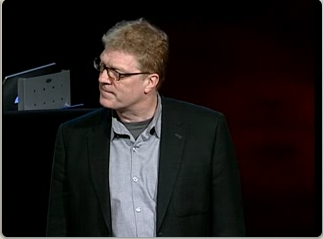
Picture_13 Sir Ken Robinson spoke at this year’s Technology Entertainment Design (TED) conference in Monterey. Watch this video and marvel at how easily he reminds us to embrace failure on the path to creativity.

Also pay attention to the fact that this is a "business" speech. Made all the more powerful because it is warm, engaging and completely devoid of visual aids.

Ah, refreshing.

"Sir Ken is author of Out of Our Minds: Learning to be Creative,
and a leading expert on innovation and human resources. In this talk,
he makes an entertaining (and profoundly moving) case for creating an
education system that nurtures creativity, rather than undermining it."
(Recorded February, 2006 in Monterey, CA) — Ted’s website.

July 23rd, 2006

Think Different’s Triumph

Thinkdifferentbuilding
I found myself reviewing the copy for Apple’s famed "Think Different" campaign last week and was immediately struck by the fact that the usually hugely secretive Apple had announced its entire brand strategy in a campaign that debuted way back in 1997 four years before the launch of iPod in October 2001 (yes, it has been that long already).

Read it again:

"Here’s to the crazy ones.
The misfits. The rebels. The troublemakers.

The round pegs in the square holes. The ones who see things differently.
They’re not fond of rules.
And they have no respect for the status quo.

You can praise them, disagree with them, quote them, disbelieve them, glorify or vilify them.
About the only thing you can’t do is ignore them.
Because they change things.

They invent. They imagine. They heal.
They explore. They create. They inspire.
They push the human race forward.

Maybe they have to be crazy.
How else can you stare at an empty canvas and see a work of art?
Or sit in silence and hear a song that’s never been written?
Or gaze at a red planet and see a laboratory on wheels?
We make tools for these kinds of people. 
While some see them as the crazy ones, we see genius.

Because the people who are crazy enough to think they can change the world, are the ones who do."

Consider. With iTunes Apple solved the music industry’s distribution problems.  Apple followed it up by launching iPod into a market already dominated by mobile music players.

"Or sit in silence and hear a song that’s never been written?"

It was Apple that manufactured white computers and components while the rest of the industry distributed materials in two colors, black and vanilla.  It was Apple who pioneered the trademark white headphones creating the headphone generation.

It was Apple who launched the iPhoto interface.

"How else can you stare at an empty canvas and see a work of art? "

And it is Apple, thanks to its Unix-based operating system, that has the best opportunity to transform the PC into a lifestyle product in the same way Nike and Just Do It  have become far more than athletic wear.  

"Because the people who are crazy enough to think they can change the world, are the ones who do."

Apple’s revenues are up 48% this quarter. And to think Jobs laid out the strategy years ago. Right under the nose of Sony, Microsoft, and Hollywood.

If only they had been paying attention.

July 23rd, 2006

Customer hates EASY button. Customer hates EASY button.

Evilbutton
“It seems that advertising agencies think that they can cram any amount
of factitious crap down the gullible throats of the public. We need to
remind them we are a heck of a lot smarter, and can process far more
complex equations, just given half a chance. … As a business owner of
25 years, I found the mere notion of pushing a magic button which
solves all problems a slap in the face. Business is not easy. It takes
a great deal of blood, sweat, tears, skill and perseverance to make it
all happen. I couldn’t sit idly by when I saw this.”
— Crazy Al Cohen, who has published a PDF guide for hacking Staples’ EASY button into an "EVIL" button. (In an interesting twist, Cohen recorded his comments onto the EASY button’s hard drive via the built-in speaker which can be rewired to receive as well as transmit.)

Mind you he does have a point. I mean, why exactly is it more easy to get office supplies at Staples than any other big box retailer? It isn’t.

Despite the hype, it seems to me the EASY button campaign is an amazing accidental hit for the office products giant. And the attempts to link the button’s success back to an incredible consumer insight are the result of the reductive analysis that so often characterizes "brand analysis."

Every now and then an idea just works. It plugs right into our culture and takes off.

And the EASY button is a big hit for Staples. So big in fact that they have sold 300,000 shrink wrapped buttons already and the idea has been credited with helping drive Staples to the top of the office products hit parade.

Staples_easy03
To think the EASY button developed out of Staples’ drive to improve customers’ ability to find products in their stores (which small business owner has not spent hours hunting paperclips down featureless isles? I know I have).

"The five-year branding odyssey that began in 2001 has helped make $16.1
billion Staples the runaway leader in office retail. In 2005 its profit
was up 18 percent to $834 million."
Business 2.0.

But it is an unfortunate by-product of user generated content like Mr. Cohen’s mad rant (and amazingly detailed PDF), that no matter how effective an idea becomes, someone, somewhere, will be upset by it.

I’m reminded again of Bogusky’s comment about Subservient Chicken: "I like that they are talking about the work. If they aren’t talking, then your brand is dead."

July 22nd, 2006

TV text messaging: show me the money and I’ll show you a trend.

American Idol was much more than a cultural phenonmeon. It was also the first smash hit for text message voting and, it appears, a major weapon for the networks in their battle to keep viewers from watching programs on-demand, via DVRs like Tivo.

"Idol" generated over $6 million in texting fees last season, from 64 million text messages (each cost $0.10) up from 7.5 million messages in 2003.  Broadcasters typically get 40% of show text revenue, carriers — Cingular, Sprint and Verizon — keep the balance.

Moved by the found money in texting, and agreements to fix toll charges as high as $0.99, sufficient cellphone network bandwidth and widespread carrier participation, more shows will seek viewer input next season reports Li Yuan in July 10, Wall Street Journal "Televisions New Joy of Texting."

"Big Brother," "Deal or No Deal," "The Country Music Awards," "America’s Got Talent" and the upcoming "Hell’s Kitchen" will all drive the new wave of consumer participation. Dozens more shows are expected to follow suit.

And that pleases advertisers and the networks for a number of reasons:

Greater interactivity gives broadcasters a weapon to battle the rising tide of DVRs, because it ensures more viewers watch live shows rather than recorded versions. Providing a bigger captive audience for advertisers (and another metric to gauge viewership.)
Overall viewership jumps as more people stay tuned to watch the show from beginning to end.
Voting drives loyalty: CBS notes that some voters joined Big Brother’s online fan club, adding to network online revenue and ensuring more return to view the show every week.
Text voting helps spread the idea of texting, further strengthening carrier revenues.
And texting strengthens the bond between viewer and show. During last season’s "Idol" finale, my family texted continually — and the interactvity spurred conversation throughout the week as we waited for the results of the run off between the spasmodic Tyler Hicks and the glamorous Catherine McPhee. 

If you want to know where the Web is headed, just follow the money. 

At a buck a message, not only can we can expect to see more shows make room for texting in the future, we’ll also see more radical format changes in shows as producers work to maximize text revenue.

Just as banner advertising opportunities multiplied on web pages as publishers made the most of selling the same eyeballs, and news broadcasters agreed to clutter screens with the news ticker, we will see TV producers push interactive voting to the limit of effectiveness.

Similarly we can expect dramatic changes online as web publishers and carriers rush to grab incremental text revenue from less revenue-rich sources like email, VOIP and IM.

Remember where you read it first.